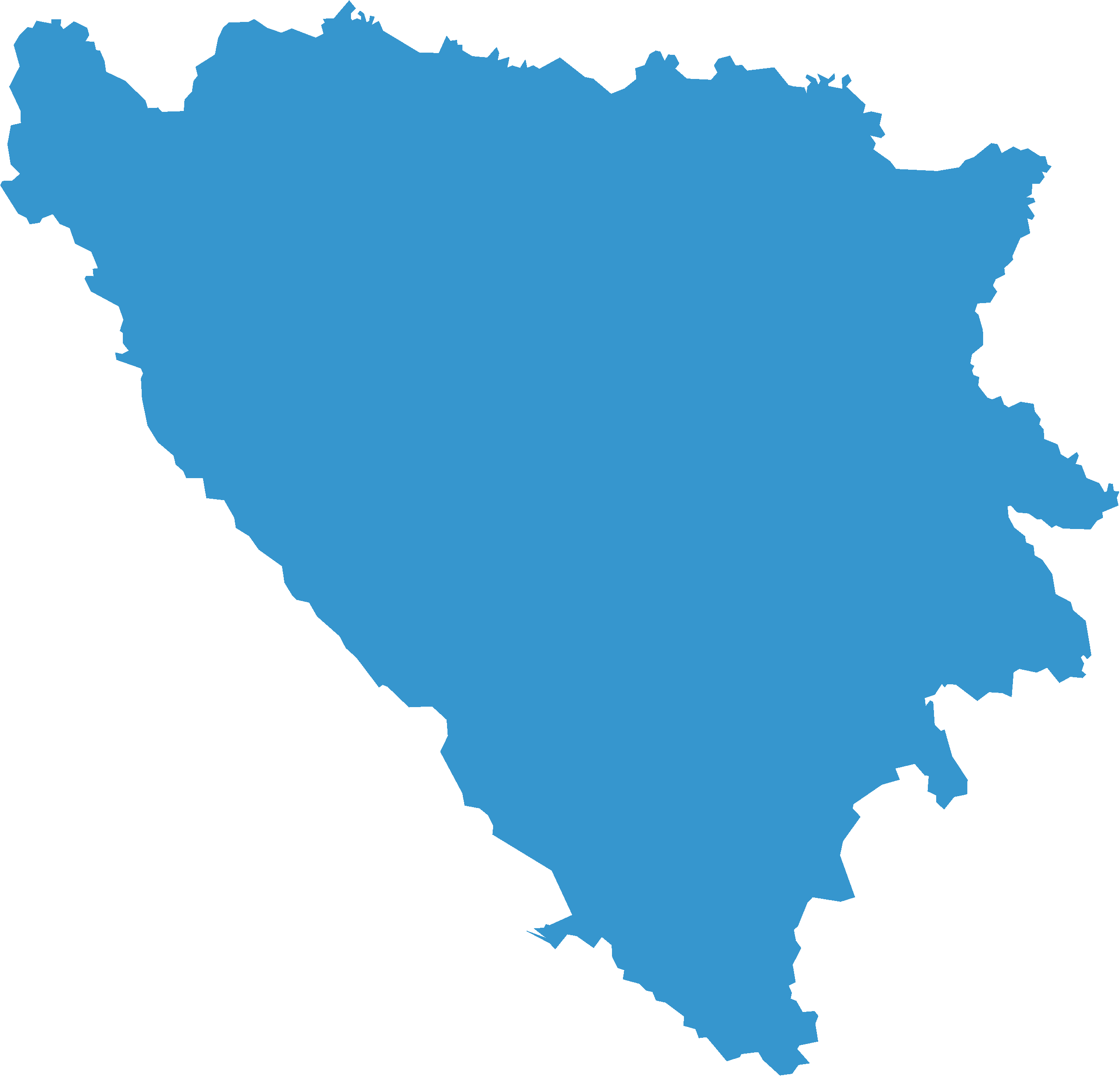
The mountainous country of Bosnia and Herzegovina in Southeastern Europe borders the Adriatic Sea, Croatia, Montenegro, and Serbia. Slightly smaller than West Virginia, Bosnia and Herzegovina became one of six republics of Yugoslavia after WWII. After declaring their independence in 1992, the country underwent war as ethnic nationalists vied for control of various territories. Ethnic cleansing campaigns between 1992 and 1995 killed thousands and displaced millions. International intervention led to a peace agreement in 1995.
More than half of the population is rural, and mainly comprised of three ethnic groups: Bosniaks (50%), Serbs (31%), and Croats (15%). The country’s main religions of Islam, Serbian Orthodox, and Roman Catholic correspond respectively with the country’s people groups.
The points of the triangle on the country’s flag represent the three main peoples, and Bosnian, Serbian, and Croatian are all official languages.
Bosniaks are one of Europe’s least evangelized peoples. They are 95% Sunni Muslim. Their Islamic identity, however, is more cultural than religious.
The inhabitants of Bosnia and Herzegovina are family-oriented and cherish tradition and hospitality. High unemployment and low wages have caused the younger generation to look outside the country for jobs.
A small indigenous ministry divides its focus among three cities where workers pastor an established church, lead a small home group, and shepherd a new church plant. They work among Bosniaks, Croats, and Romani people (a mainly Muslim ethnic minority) and conduct various community outreaches, including workshops for children and adults, humanitarian projects, Christmas outreaches, medical outreaches, and personal visits.
Over the next few years, the ministry plans to cultivate leaders from the established church who can take over the new church plant and the home group, which will free them to establish new churches in other unreached cities.
Sources: Joshua Project, CIA World Factbook, Encyclopedia Britannica