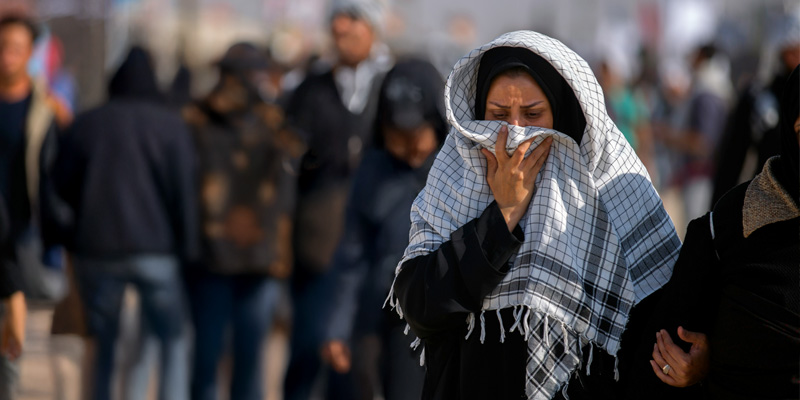
Local missionaries hadn’t even had time to process the news coming in from Syria when their phone rang. When they answered, the woman on the other end—a neighbor—began to weep. She told them of two young men—both students—who had recently rented a home nearby. They were from Suwayda, she said, and the family of one was trapped in the ongoing, dangerous situation. The family of the other young man had been murdered, and when he tried to call his father, one of the killers answered the phone.
“Where is my father?” the young man asked the stranger. “We sent him to hell,” came the reply.
“Pray that the presence of Jesus will wrap around their hearts like a warm blanket.”
“Who has the right to say that?” the missionary said later. “This is madness. Evil. And these two young men are now in our care, in our community—broken, grieving, searching. Tonight, for the first time, they will attend our church gathering. Please, please pray that the presence of Jesus will wrap around their hearts like a warm blanket, that His Spirit will speak louder than the trauma.”
Clashes between two groups in the region—the Bedouin and Druze communities—led to the horror experienced by the families of the two young men in the ministry’s care. But they weren’t the first such conflict in this post-civil-war country, and minority groups are uncertain of how the recent change in national leadership will impact them. Many members of a Sunni Muslim jihadist group now serve in key roles in the government, and people are afraid of the lack of constitutional protection for minorities, which include among them Christians and Druze, an ethnoreligious community whose roots lie in Shi’a Islam.
As a result of this distrust in the government, conflicts continue to arise, largely because of fears over how well protected minority groups truly are, and what their future share of resources might look like.
In Suwayda in July, the Syrian government ultimately sent troops, who then joined Bedouin fighters in their attacks against the Druze. Hundreds were massacred, including 83 Druze who were purposefully executed by government forces, according to the UK-based Syrian Observatory of Human Rights. In addition, at least 90 Christian families fled to escape the violence. Though a tenuous cease-fire was eventually reached a few days later, it did not come before Israel also entered the fray, bombing nearby government targets to protect the Druze.
The ministry that operates in the region requests prayer: for those who have lost loved ones, for those still trapped in the area, and for the missionaries themselves as they not only comfort those in their care but also work to provide supplies to those who have lost everything. “We believe God writes redemptive endings, even in the darkest chapters,” the ministry leader said. “Please pray that the Church will continue to be salt and light in this time of deep sorrow and suffering.”
“Your help makes a real difference.”
As you pray, please consider helping in other ways too. Local missionaries have managed to get basic necessities such as food into the region, though many roads are closed and prices are three to four times higher than normal. “The scarcity is still severe,” the ministry leader said. “We ask you to consider giving. Any support you send can help us reach the most vulnerable with food, comfort, and the love of Christ. Your help makes a real difference.”
– Indigenous Missionary in Peru


– Indigenous Missionary in Peru
Share this post:
We use cookies to enhance your browsing experience, serve personalized ads or content, and analyze our traffic. By clicking "Accept All", you consent to our use of cookies.
Manage your cookie preferences below:
Essential cookies enable basic functions and are necessary for the proper function of the website.
CloudFlare provides web performance and security solutions, enhancing site speed and protecting against threats.
Service URL: developers.cloudflare.com (opens in a new window)
Google reCAPTCHA helps protect websites from spam and abuse by verifying user interactions through challenges.
Google Tag Manager simplifies the management of marketing tags on your website without code changes.
Marketing cookies are used to follow visitors to websites. The intention is to show ads that are relevant and engaging to the individual user.
Facebook Pixel is a web analytics service that tracks and reports website traffic.
Service URL: www.facebook.com (opens in a new window)
You can find more information in our Cookie Policy and .