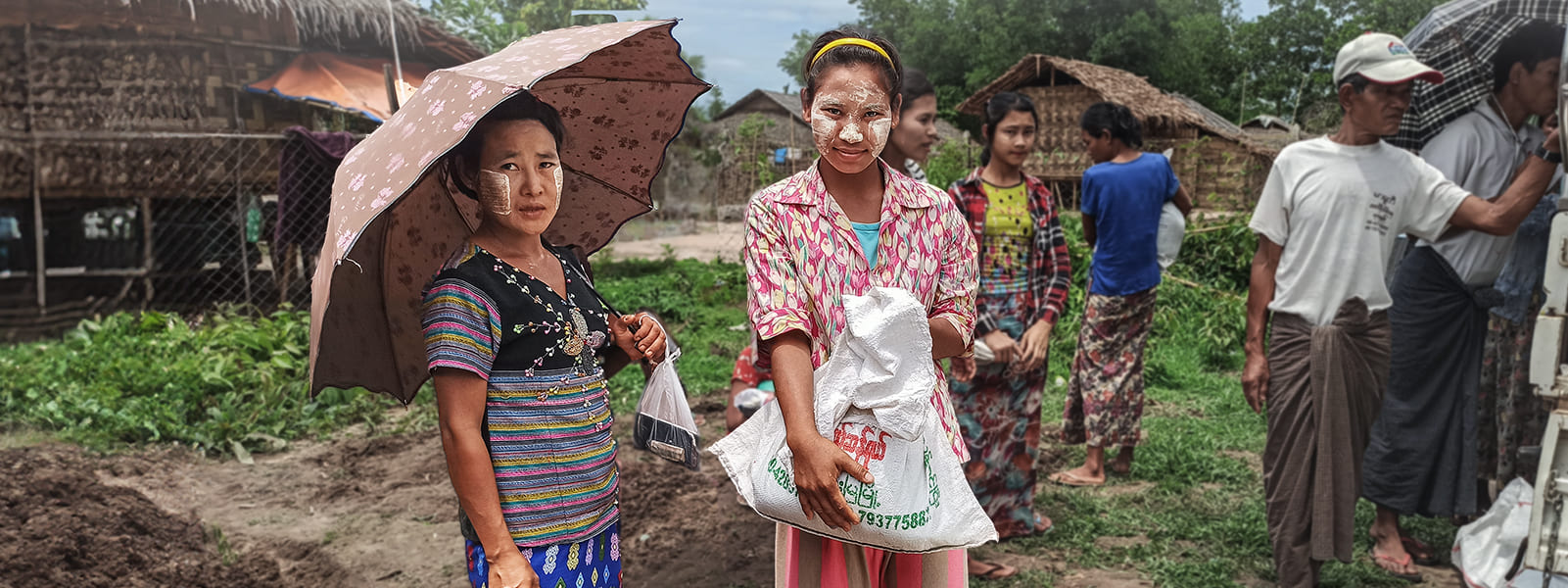
For a moment in time—when a democratically elected president stood at Myanmar’s helm—a generation of young adults hoped life would be different than it had been for the generations that came before them. But in February 2021, when that same president was overthrown in a military coup, that dream shattered.
Now, villages and towns across Myanmar stand empty—flattened in air raids or destroyed by battles between the country’s military and resistance fighters. Roads are so heavily bombed or guarded that they are impossible to navigate. The internet and electricity rarely work. And the generation of young adults who once saw a glimmer of a different future find themselves drowning in a life they never expected, forced to make choices they never imagined they would have to make.
In February of this year, the military activated a long-standing conscription law that makes men ages 18 to 35 and women ages 18 to 27 subject to two years of military service in an effort to regain ground lost to resistance fighters. Among those whose names were recently called is that of a pastor and father of a young family who serves with a native ministry in the central part of the country. “His deployment is imminent, and he may be ordered to leave for his assignment at any time,” the ministry leader said.
But other potential draftees—an estimated tens of thousands, in fact—have fled the country every month since the law’s activation to avoid being drafted into a war they don’t want to fight. Others chose to join the resistance. And many more now hide in remote jungle regions, joining men, women, and children who were forced to run for their lives as soldiers advanced on their homes.
The United Nations estimates that more than three million of the country’s 55 million people have now been displaced because of the conflict. Approximately 18.6 million need humanitarian assistance. “We’ve also received reports of shooting at unarmed fleeing villagers,” James Rodehaver, team leader for the Office of the United Nations High Commissioner for Human Rights, said in a UN report. “We have confirmed at least four cases of beheadings and multiple enforced disappearances of individuals, as well as several villages and homes that have been burned.”
Like the young pastor who will be forced to fight, many other native missionaries are not immune to the nightmare of this seemingly never-ending war. “Myanmar is a living hell,” a ministry leader said. “We humbly request your ongoing prayers during these trying times.”
Despite what seems like an impossible situation, however, these missionaries continue to do the Lord’s work. And with the increasing displacement of more people fleeing the conscription law, that outreach has become even more important. “It might seem like an unfavorable time for ministry, but we felt compelled not to remain silent,” a ministry leader said. “We actively sought and created opportunities to engage in ministry.”
Missionaries forced to flee their own homes evangelize and hold worship meetings among other displaced people in their jungle sanctuary. Some teach school to the displaced children, even providing final examinations to students. Others continue with the risky distribution of Bibles, using smugglers’ routes to carry Scripture to people in desperate need of hope. “Fleeing to China because of the civil war, I worked as a home-maid with tears as my constant companion,” one refugee said. “Receiving the Bible was transformative; reading it daily has given me peace and reassurance of my salvation, and it has helped me overcome depression.”
Please consider a donation today to provide missionaries with the resources they need to shine a light during Myanmar’s dark hour. Pray their work will spread the hope of Christ across this war-weary land.