Two years ago, Nigeria was Africa’s largest economy. People like Babatunde Afolabi, who spoke with the New York Times in June, worked to support his family by transporting people with his tuk-tuk taxi, which he owned. Life wasn’t easy, but they had enough.
After his wife had childbirth difficulties, however, Babatunde was forced to sell his tuk-tuk to pay their medical bills. He found work in construction and, though the pay was far less than what he once earned, they still managed to get by. “We had no thoughts about starvation,” he told the Times.
Babatunde, like millions of other Nigerians, could not have imagined the magnitude of the crisis about to unfold.
Inflation Explodes, Economic Disaster Is Imminent
Fast forward to 2024. The food inflation rate soared above 35 percent at the beginning of the year. A liter of fuel has tripled in price compared with the price nine months ago, and the price of rice—a staple food here—has more than doubled.
Babatunde and his family now barely survive. They can afford just a few biscuits and a little bread. Their 6-year-old child receives 20 peanuts each day.
“An unprecedented number of children in northern Nigeria are suffering from acute malnutrition,” aid workers from the organization Doctors Without Borders told one news source. “We have a crisis at hand.”
How Has Nigeria Fallen So Far?
The crisis is largely rooted in the government’s recent removal of fuel subsidies, which kept fuel prices low for citizens, and the decision to float the currency, which caused prices to rise. But these major economic changes also came as the country continues to struggle with insurgency, banditry, and kidnappings, which wreak havoc in the northern regions and significantly affect local agricultural productivity.
“The UN predicts that 82 million Nigerians may go hungry by 2030.”
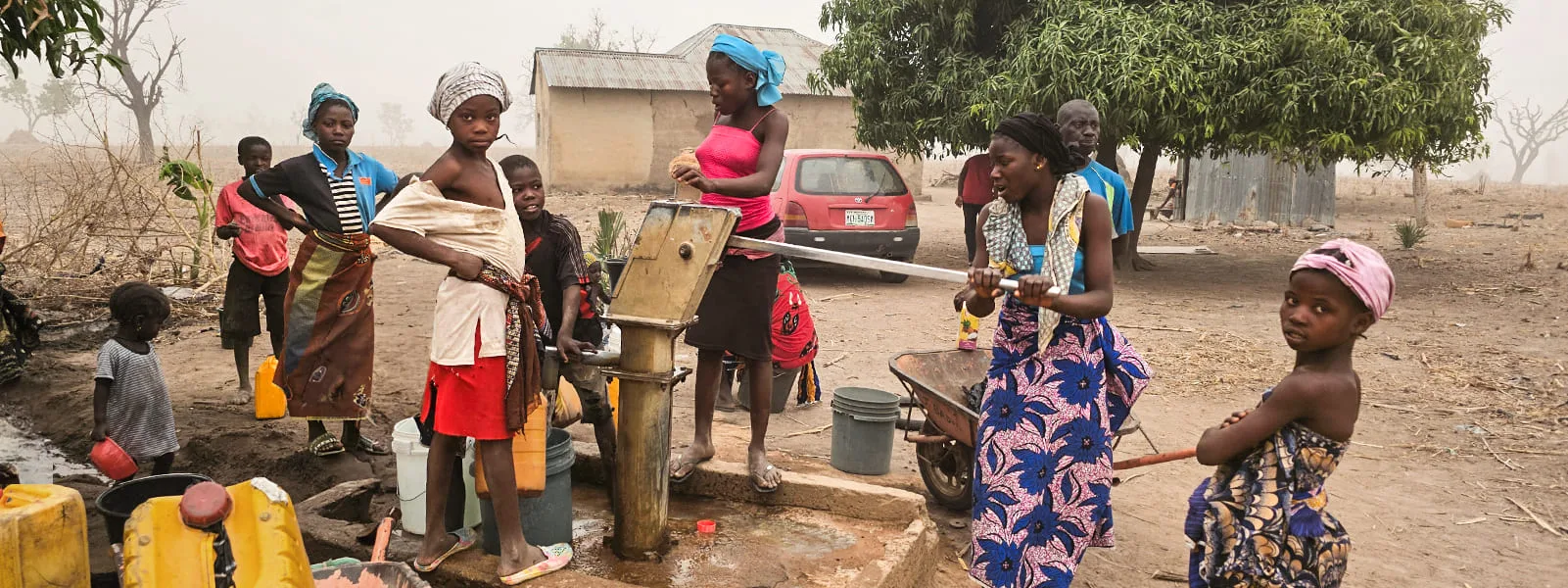
The UN predicts that 82 million Nigerians may go hungry by 2030. To make matters worse, remote villages that were promised access to clean water more than five years ago have largely been forgotten in the wake of the economic crisis. Now, not only must they deal with the health issues associated with contaminated water, but they must also find ways to survive with the increasingly dire food shortage. “Despite government initiatives and a state of emergency declared in the water, sanitation, and hygiene (WASH) sector since 2018, remote communities feel forgotten, with pleas for boreholes or reliable water sources remaining unaddressed,” one news source reported.
Your Support Enables Native Ministries to Help
Not only do native ministries help provide food to those in need, but they are also helping provide access to clean water. “We have several communities begging for water and for help,” one ministry leader said. “We have provided more than 300 boreholes since inception to the people.”
At a time when many wonder how they will survive, access to clean water is a lifeline. But missionaries cannot provide boreholes without your help. “Thanks for the support we get from you,” the ministry leader said. “It has helped so many families.”
These boreholes not only provide villagers with clean water, but they also alleviate the question—at least to some degree—of how they will survive in the midst of Nigeria’s crisis. Boreholes are also an access ministry, establishing native missionaries as trustworthy among villagers who are often Muslim and either hesitant or hateful toward Christians. “Islam is the greatest obstruction to the gospel work in Nigeria,” a ministry leader said.
Communities Are Transformed Through Compassionate Aid
Last year, missionaries provided a borehole to a Muslim community in northern Nigeria. As a result of this aid, the village chief and his family chose to follow Christ. They then provided land for a church to be planted, opening the door for the gospel to spread.
In another community, native missionaries provided a borehole and medical services. As a result, many came to the Lord. “Church planting has begun, and doors opened to many other people simply because humanitarian services transformed the people who in turn are transforming whole communities,” the ministry leader said.
Challenges Are Mounting, but They Are Not Insurmountable
Nigeria has challenging days ahead, but because of your help, there is still hope. Hope that families can feed their families. Hope that people will have clean water. Hope that the Lord will walk among those once rooted in false religions. “The Lord does not promise sunshine without clouds,” the ministry leader said. “Pray for our people and ask the Lord to intervene as people are suffering.”
Please consider a donation today to help missionaries share Christ’s love in practical ways, ways that also open the door to share the abundant riches of His living water, which will never run dry.