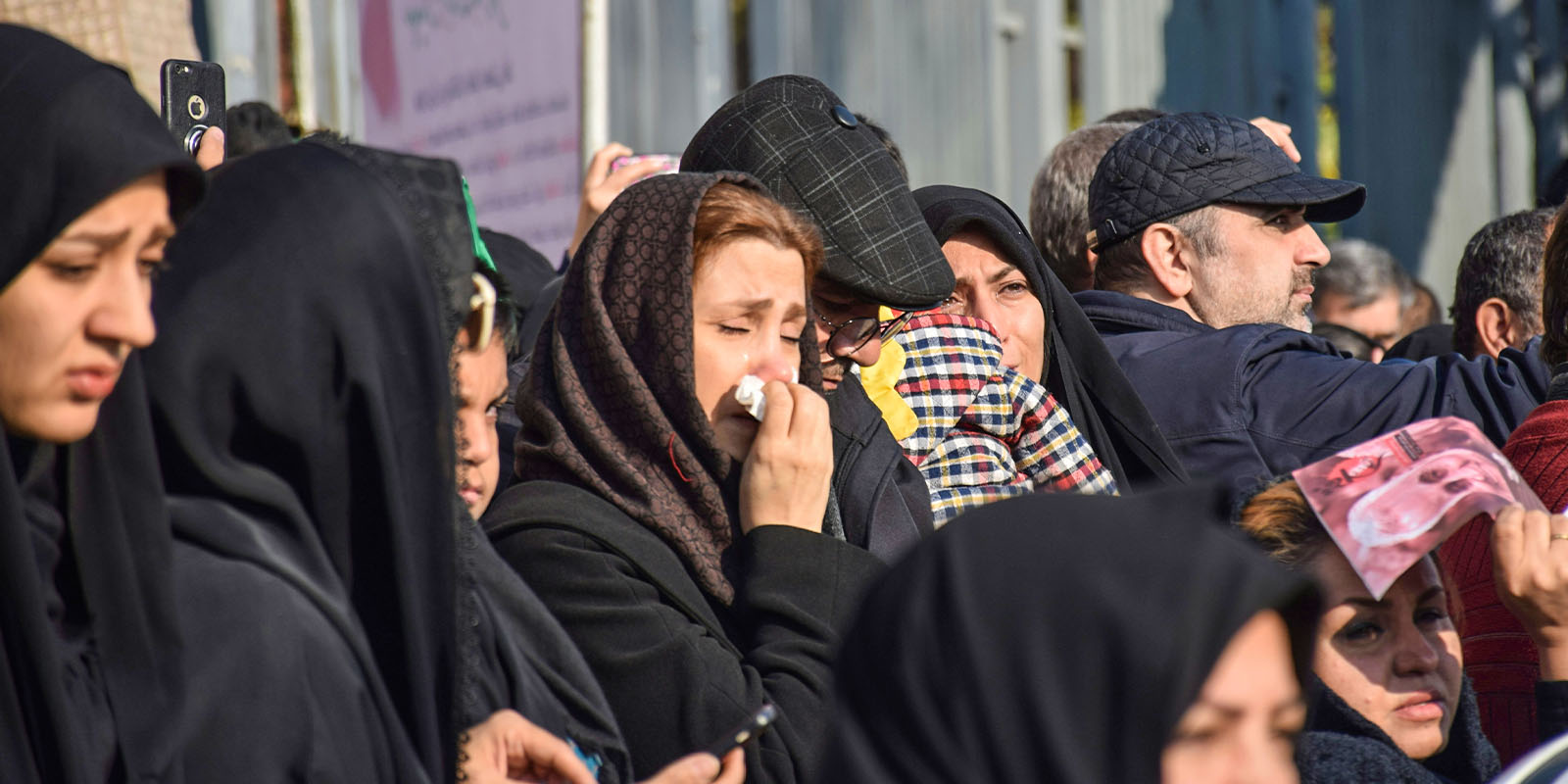
On February 28, the United States and Israel began striking targets within Iran, decimating locations deemed an imminent threat and killing Iran’s Supreme Leader, Ayatollah Ali Khamenei. The decision, known as Operation Epic Fury, came after months of protests by Iranians over dire economic conditions and the regime’s brutal response, which left nearly 7,000 dead.
Assisted ministries had already begun assisting Iranians following the protests, and now they seek more help as they await word from missionaries inside the country. “Every hour it seems like missiles and drones are being intercepted above us,” said a ministry leader who is currently in a bordering country. “We have almost no communication with our believers inside the country aside from a few intermittent conversations.”
The Protests
Ministry work in Iran has never been easy. But in the weeks and months prior to country-wide protests that began December 28, 2025, missionaries were witnessing a beautiful period of gospel work. Iranian ministry leaders living outside the country were conducting regular meetings with leaders living inside Iran, Bibles were constantly distributed, and small house church congregations were meeting.
“Weekly gatherings, worship services, prayer meetings, Bible reading, fellowship, and all other church-related activities were conducted as usual,” the ministry leader said. “Prior to Christmas, we were able to prepare and distribute food packages to approximately 400 individuals and families. Many of these packages were distributed together with a Bible, which was received very positively among believers. Overall, church activities continued according to their normal pattern.”
“All means of communication between us and our churches and church leaders inside the country were completely cut off.”
But December 28 proved to be a tipping point for Iranians, and everything changed seemingly overnight as violent clashes between citizens and authorities grew increasingly violent. Then, the blackout happened.
“All means of communication between us and our churches and church leaders inside the country were completely cut off for a period of approximately two to three weeks,” the ministry leader said. “During this period, the holding of church services was extremely limited. In many cases, church leaders had no contact at all with churches located outside their cities or regions. Additionally, all of our online church meetings were completely suspended for the entire period.”
“Reports indicated that even obtaining simple food items such as pasta and tomato paste became extremely difficult.”
As the days grew more dangerous, day laborers lost work, including many church leaders. At the same time, markets ran out of basic food supplies, which meant the price of whatever remained on the shelves escalated beyond what many could afford. “Reports indicated that even obtaining simple food items such as pasta and tomato paste became extremely difficult,” the ministry leader said. “Prices increased by as much as tenfold.”
The Tragedy of Oppression
By mid-February, the waves of protests had mostly ended, largely because of the brutal response by Iranian authorities. But across the country, people were grieving loved ones killed or injured in the clashes, including ministry leaders who learned of believers directly affected by the violence.
“Because of fear and security concerns, and the refusal of hospitals to admit and treat individuals injured during the protests, two of our believers were unable to receive timely medical care,” the ministry leader said. “One of our injured brothers was abducted, and we do not know whether he is still alive.”
“It has caused profound sorrow and serious concern about the future of the people of Iran, particularly believers who remain inside the country.”
“On one of the protest days, one of our believing sisters, acting with caution, took her child to attend his sports class. But as they returned home, the situation became violent, and her eight-year-old son was shot in the head by authorities and died in the street. This heartbreaking incident has deeply grieved and shaken us. It has caused profound sorrow and serious concern about the future of the people of Iran, particularly believers who remain inside the country, those who seek to follow Christ, walk in the way of Christ, and share their faith with their friends and loved ones, despite the extreme dangers they face.”
Help Iranians in Their Time of Need
Then, at the end of February, missiles began to rain down, and Supreme Leader Ayatollah Ali Khamenei was killed almost immediately. Meanwhile, in a neighboring country, ministry leaders had just completed training 23 leaders who planned to return to Iran to share the gospel. They had also just begun shipping 20,000 Bibles into the country.
“God is so good.”
“God is so good, and we are so thankful to be here with our people,” one of the ministry leaders currently in a neighboring country said. “Once the fighting stops, we will be first responders to assist our people both here and inside Iran. Our goal is to raise $100,000 for medical needs, food, Bibles, and first-response requirements.
Please consider a gift today. Your donations will assist with this aid during such a critical time. And please join in prayer with Iranian believers and the missionaries who work there. Pray for perseverance and protection as they live out their faith in a spiritually dark place.